


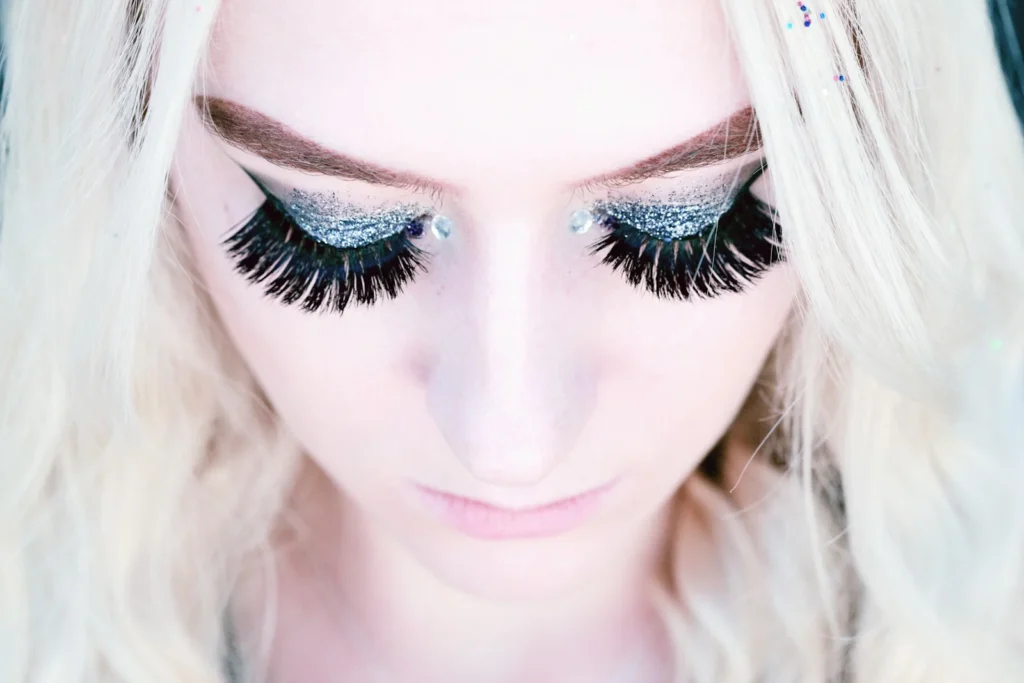
A short video can make a lash style look immediately recognizable. It rarely shows the base clearly, gives the length sequence or explains which parts of the look come from the lashes rather than the lighting and makeup.
That leaves a gap between “we want this look” and a sample a supplier can make and repeat. The buyer’s task is to translate the visual direction into a few decisions that can be checked.
Start with what the photograph actually shows
Collect a small reference set rather than one heavily edited image. Include a front view, a side view and, if available, a product-only photograph. Note what you are borrowing from each reference: an airy outline, a lifted outer profile, separated longer fibers or a softer shade.
A mood board is a direction, not permission to reproduce another brand’s protected artwork, packaging or branding. Give the supplier a description of the intended effect and develop an approved sample for your own collection.
Record the limits of the reference too. A close-up can hide how a style looks at conversational distance. Dark eyeliner can make a base appear less visible. A filtered image is a poor color standard. These are reasons to request another view, not reasons to guess.
Break the style into separate variables
Names such as wispy, spiky, wet-look and natural are creative shorthand. In a buying brief, describe the feature behind the name. The following are prompts for discussion, not fixed industry definitions.
| Style direction | Details to describe | Sample comparison |
|---|---|---|
| Wispy or airy | Spacing, length variation and the outline between longer fibers | View the silhouette against the same background |
| Spiky or separated | Position, height and spacing of the longer sections | Check whether the pattern repeats as intended |
| Soft or natural | Overall density, length profile and base visibility | Compare at close and normal viewing distances |
| Brown or mixed tone | Shade reference, finish and whether the base matches | Compare physical samples under the same light |
Color and texture also overlap. Brown lashes can have a wispy or fuller profile; “brown” does not define the whole style. For a current retail example, the KISS brown wisps collection separates shades and style options within the same color family. A product listing demonstrates an available format, not the size or growth of a market.
Change one main feature at a time
If every sample has a different base, shade, density and length mix, it becomes difficult to explain why one is preferred. Keep a familiar reference as the control. Ask for a small comparison set in which each alternative changes a clearly named feature.
For example, when considering a softer shade, hold the construction and length pattern as close as practicable to the reference. When reviewing a more separated silhouette, keep the shade and retail format stable. Note unavoidable differences instead of treating the samples as an exact experiment.
Keep the evaluation consistent: the same background for product photographs, the same camera distance and the same sample labels. A change in exposure can make a lash appear lighter or denser even when the product has not changed.
Decide what the trial needs to teach you
Before choosing the favorite, write down the question the proposed style is meant to answer. Is it filling a gap between two current looks? Offering a less dramatic option? Giving an existing customer a different pack configuration? A style can photograph well and still duplicate something already in the range.
- Recognition: can reviewers explain the difference from the existing style without reading the name?
- Range fit: does the new option serve a distinct preference or use case?
- Handling: does the agreed product remain intact during the intended removal and preparation method?
- Presentation: do the tray arrangement and photography explain what the retail unit contains?
Keep visual preference separate from safety, wear or adhesive-performance claims. A style comparison does not establish those properties. Any separate use evaluation should follow the appropriate product instructions and an agreed assessment process.
Write the decision as a production brief
“Sample C wins” is only the start of the approval. Add its sample code, the accepted color, the length distribution, the base details and the retail count to the product specification. Mark any detail that still needs another round.
This is also the point to decide whether the idea belongs in a small trial, a later release or the permanent range. There is no need to turn every attractive reference into an order. A useful test gives the next buying decision a reason.
Compare the relevant cluster lash or strip lash format first, then send the style direction together with the details that need sampling.